Great Milic Nature Park
Hungary's nature parks have the potential to serve as effective platforms for local, self-organized nature conservation efforts within a viable rural economy and society. The founders encompass a diverse array of entities, including municipalities, their associated associations, civil society organizations, and local businesses. In addition, regional agricultural administrative bodies also play a pivotal role in the preparation and oversight of regional goals and programs. Collectively, these entities are involved in the collaborative development and implementation of regional initiatives, underscoring a comprehensive and inclusive approach to regional governance.
The natural cultural landscapes of Hungary are the result of centuries of thoughtful management. The role of the farmer as a steward of the natural cultural landscape is integral to the preservation of its values. The cornerstones of effective landscape stewardship are family farms, which also serve as the foundation for a robust and sustainable rural society. The Hungarian rural economy should be structured around family farmland use and cooperation. Official requirements and tasks—including those related to nature conservation—should be formulated and implemented with social validation and authorization.
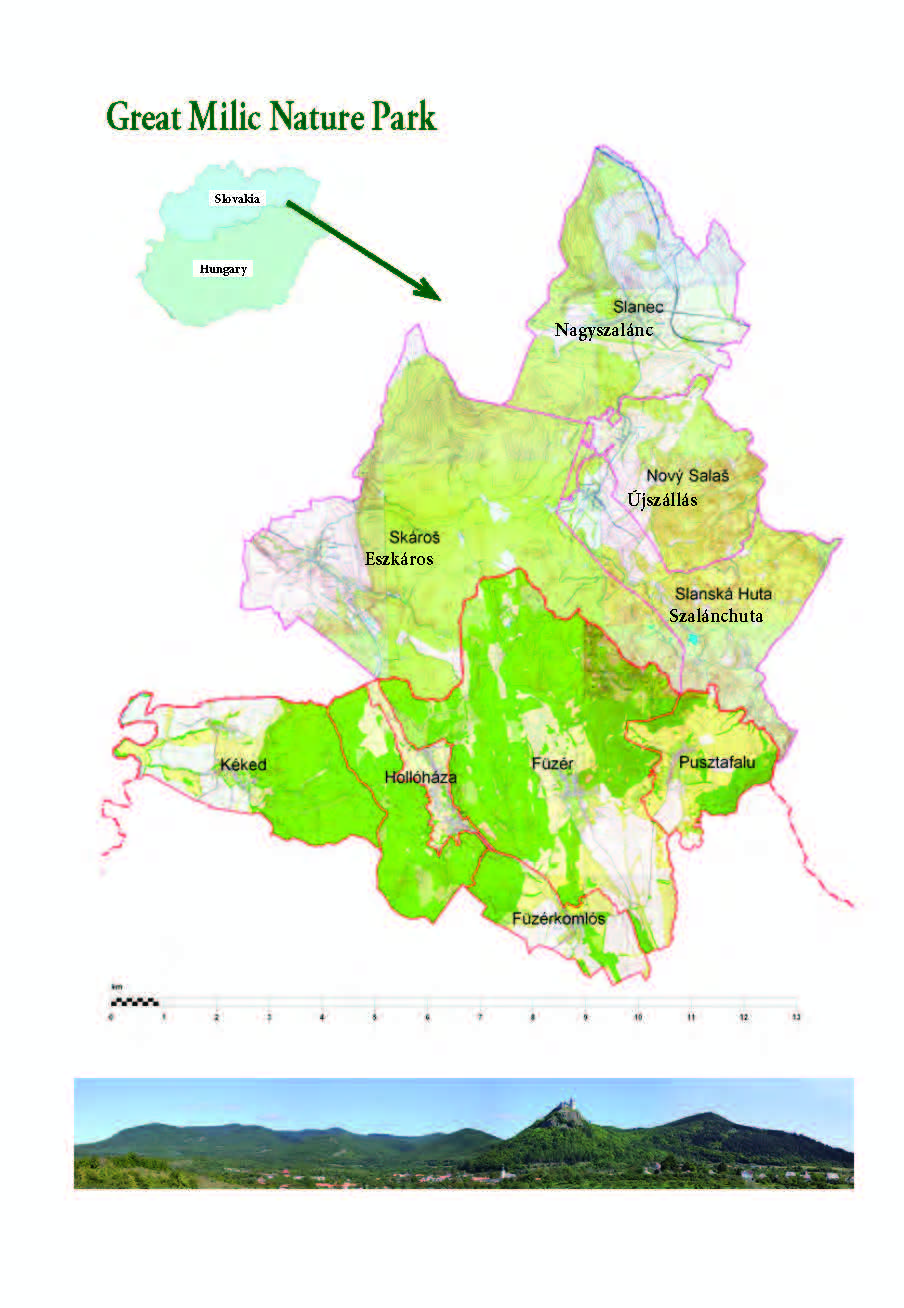
Collection of Studies on the Great Milic Nature Park
Nyári, László ed. (2012): Great Milic Nature Park – The world of the preserved values –; Municipality of Füzér, Füzér, 56 p.
Studies
Jozef Bela: introduction; pp. 7-8.
Nyári, László: Great Milic Nature Park – The world of the preserved values –; pp. 9-16.
Nyári, László: Priority areas of nature conservation in the Great Milic Nature Park; pp. 17-26.
Nyári, László: Nature trails and landscape management in the Great Milic Nature Park; pp. 27-33.
Mester, András: Wildlife management and hunting in the past and present in the Great Milic; pp. 34-38.
Szombathy, Viktor: Szalánc (Slanec) Castle; pp. 53-56.